
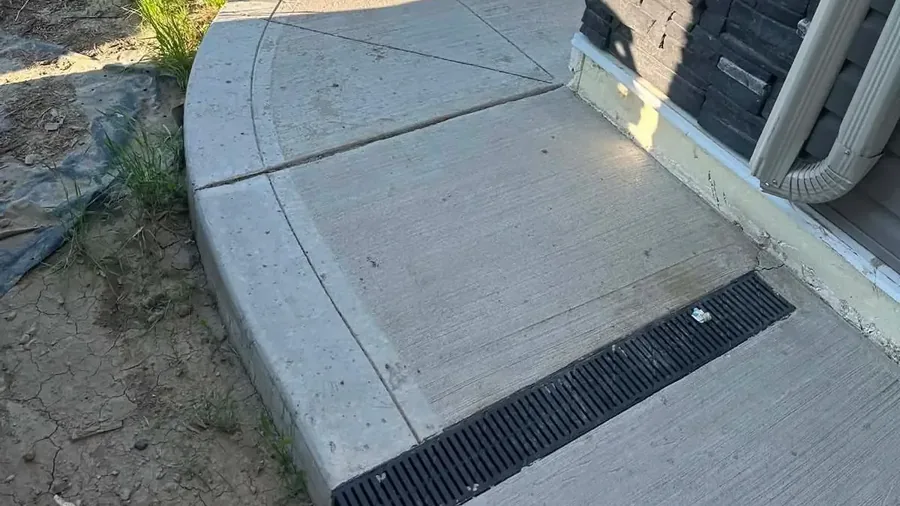
A concrete walkway should provide safe access while also helping the property manage rain, snowmelt, roof runoff and water moving across nearby surfaces.
Drainage problems are especially noticeable beside houses and entrances, where space is limited and water may collect on a walking route or remain close to the building. The solution may involve improving the concrete slope, extending a downspout, adding a drain, replacing a settled section or combining several measures.
The Canadian Yard reviews drainage concerns as part of concrete walkway and path projects , concrete cutting and related residential flatwork in Saskatoon and nearby communities.
Common Warning Signs
Standing water, repeated ice, saturated soil, water moving toward a door and settled or low concrete.
System Components
Walkway slope, drain elevation, a clear channel and a suitable discharge route must work together.
Best Estimate Details
Photos, rough dimensions, water source, collection area, downspouts, doors, grade and existing drains.
1. Why Walkway Drainage Matters
Exterior concrete receives water from several directions. Rain falls directly on the slab, snow melts across the surface, downspouts may discharge nearby and neighbouring grades can direct runoff toward a narrow side yard.
When water is not directed properly, it can remain on the walkway, move toward an entrance or foundation, wash soil from the slab edge or freeze repeatedly in the same location.
Safer Walking Area
Reducing recurring water and ice can make the access route more practical during changing weather.
Better Water Direction
The system should move runoff to a planned outlet rather than simply transferring it to another low area.
Improved Edge Conditions
Controlling runoff can reduce repeated soil erosion and saturation beside the concrete.
More Complete Planning
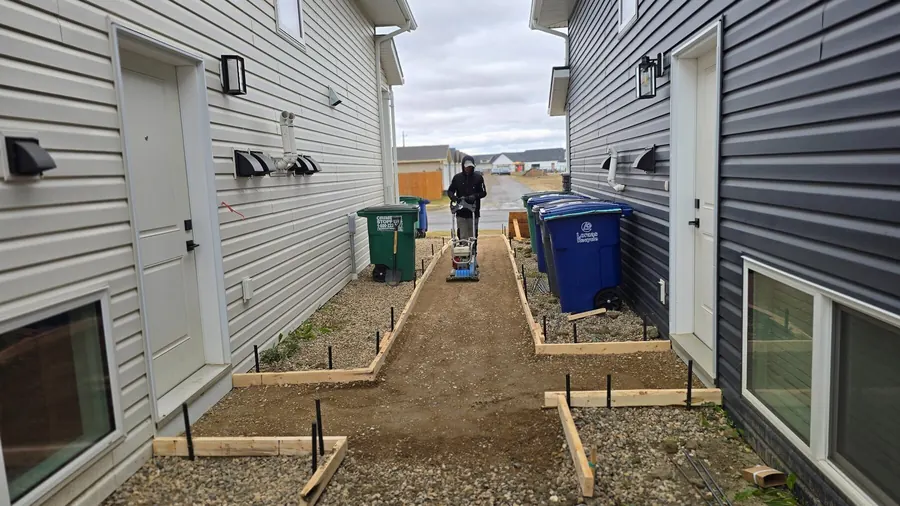
Base preparation, grade, joints and drainage should be considered before the concrete is placed.
2. What Is a Channel Drain?
A channel drain—also called a trench or linear drain—uses a narrow channel covered by a removable grate. It collects surface water across a longer opening than a small point drain.
A drain can cross a walkway where runoff moves over the full width of the path, or it can run beside a surface that needs continuous collection. The visible grate is only one part of the system.
Water entering the grate must travel through a connected route to a practical discharge location. A blocked, high or poorly positioned outlet can prevent the system from working correctly.
3. Slope, Elevation and the Outlet Must Work Together
A drain cannot collect water that never reaches it. The concrete should be shaped so runoff moves toward the intended collection point without creating a trip edge or a new low area.
Walkway Slope
The surface should direct water toward the approved route while still connecting properly to doors, driveways and existing concrete.
Drain Elevation
The top of the grate should meet the finished concrete at an elevation that accepts water and remains practical to walk over.
Discharge Location
Collected water should not be sent back toward the house, neighbouring property or another vulnerable area.
Base Stability
Excavation and compaction help the drain and surrounding walkway remain aligned over time.
4. Real Saskatoon Walkway and Channel-Drain Project
These photographs show a real concrete walkway beside a Saskatoon home. The grated channel drain crosses the walking surface near a transition point, where it can intercept water moving along or across the concrete.
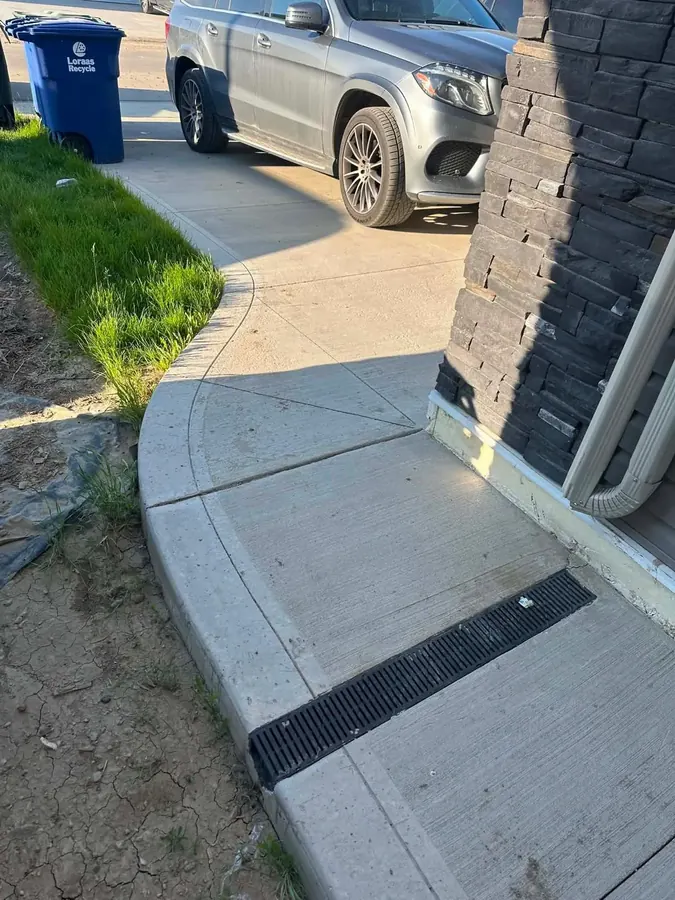
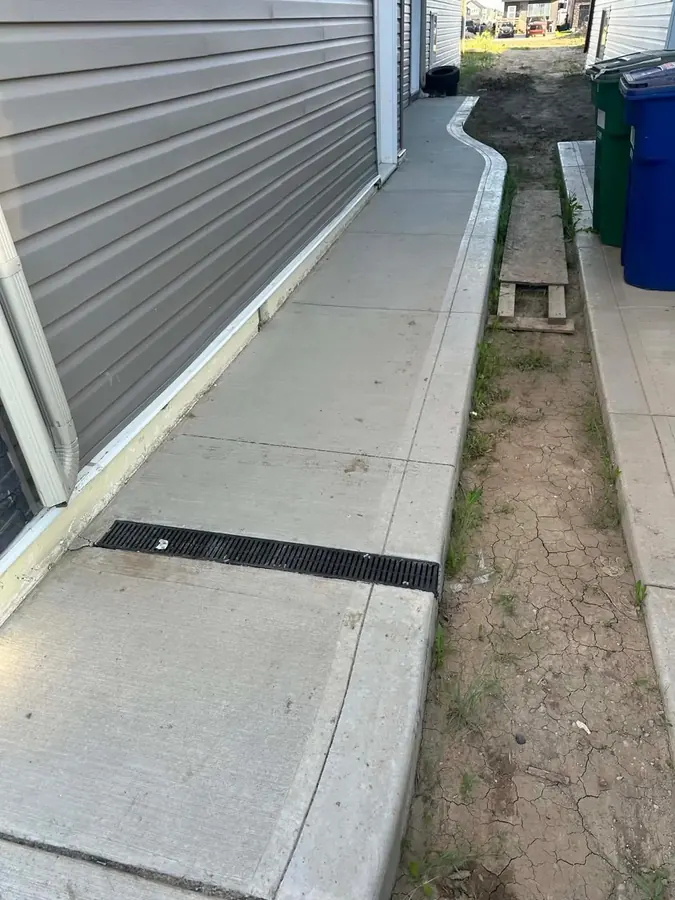
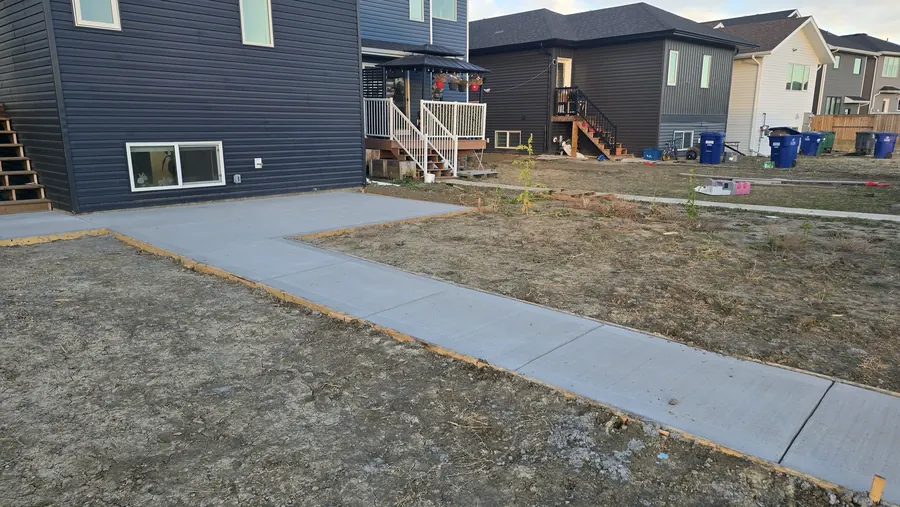
The drain outlet is below the visible surface, so photographs alone do not show the complete underground connection. The discharge route must be confirmed as part of the project design.
5. Common Walkway Drainage Options
The suitable method depends on where the water originates, the available elevation and where it can safely discharge.
| Option | How it works | Where it may fit |
|---|---|---|
| Concrete slope | Shapes the finished surface so runoff moves along an approved route. | Areas with enough elevation to direct water toward a suitable outlet. |
| Channel drain | Collects water across a grated linear opening. | Walkways, entrances and transitions where runoff crosses a wider surface. |
| Catch basin | Collects water at a concentrated low point. | Locations where runoff naturally gathers in one defined area. |
| Downspout extension | Carries roof water farther from the walkway and house. | Properties where downspout discharge contributes to recurring pooling. |
| Below-grade drainage | Helps manage water within soil or granular material. | Saturated areas where subsurface moisture is part of the problem. |
6. High-Level Planning and Installation Process
The detailed design should be based on the property rather than a generic layout. A typical project review follows these stages:
Identify the Water Source
Review rain, snowmelt, downspouts, lawn grade and runoff from nearby surfaces.
Review Elevations
Compare the house, doors, walkway, driveway, lawn and intended drainage outlet.
Plan the Collection Point
Select the slope and drain location that can intercept water before it reaches the problem area.
Prepare and Install
Complete the approved excavation, base, drain connection, forms, reinforcement and concrete work.
Existing concrete may require controlled cutting to create an opening. When the slab is badly settled or has the wrong grade, partial concrete removal may be a better starting point.
7. Signs a Walkway May Have a Drainage Problem
- Water remains on the concrete after rain or snowmelt
- Recurring ice forms in the same location
- Runoff moves toward the house, door or garage
- Soil beside the walkway stays saturated or washes away
- A downspout empties directly onto or beside the walkway
- The concrete has settled and created a visible low area
- A drain overflows or empties slowly
These signs do not automatically mean a channel drain is required. The first step is identifying the water source and the complete route it should follow.
8. Channel-Drain Maintenance
Leaves, soil, gravel and winter debris can block the grate, channel or connected outlet. Maintenance should include the entire water route, not only the visible top surface.
- Remove debris from the grate
- Lift removable grate sections when deeper cleaning is needed
- Clear sediment from the channel
- Confirm water continues flowing through the outlet
- Inspect surrounding concrete for settlement or separation
- Clean the system before heavy rain or spring snowmelt
9. What to Send for a Walkway Drainage Estimate
- Property location and preferred timeframe
- Wide photographs showing the full walkway and building
- Close photographs of the low area, drain or recurring ice
- Approximate walkway length and width
- Information about where the water originates
- Nearby downspouts, doors, driveways and lawn elevations
- Existing drain and outlet information
- Access details for concrete and drainage work
Concrete Walkway Drainage FAQ
What is the best drainage solution for a walkway?
It depends on the water source, slope, surrounding elevations and available discharge route. The solution may involve grading, a drain, a downspout change or a combination.
What does a channel drain do?
It collects water across a grated linear opening and directs it toward a connected outlet before the runoff continues across the walkway.
Should the walkway slope away from the house?
Where the site allows, exterior concrete should direct water away from the house and other vulnerable areas while still connecting properly to doors and existing surfaces.
Can a drain be added to existing concrete?
Sometimes. The existing slab, elevation, reinforcement and outlet location should be reviewed before deciding whether cutting or partial replacement is appropriate.
Will a channel drain solve every pooling problem?
No. The concrete must direct water to the drain, and the drain must connect to a clear, suitably located outlet.
How should the drain be maintained?
Remove debris from the grate and channel and check the connected discharge route so water can flow through the entire system.
Related Concrete Guides & Services
Need Walkway Drainage Work in Saskatoon?
Send photographs, rough dimensions, the property location and a description of where water originates and collects. Mention nearby doors, downspouts, driveways, low areas and existing drains.